It assesses a seafarer’s ability to communicate clearly in English to meet international safety and operational compliance standards set by STCW (Standards of Training, Certification and Watchkeeping), SOLAS, and the ISM Code.
Core Test Sections
The primary computer-based test pulls randomly from a database of over 500 questions and evaluates six distinct skills:
Listening Comprehension: Distinguish spoken orders, emergency announcements, and vessel communications over radio/PA systems.
Grammar: Functional use of tenses, prepositions, and structural patterns in professional contexts.
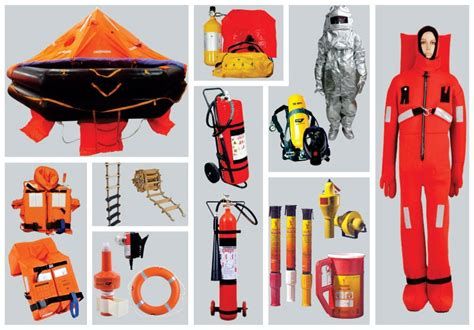
Vocabulary: Maritime terminology (e.g., standard vessel parts, operations, equipment, safety tools) vs. plain English.
The Past Simple tense is used in Maritime English just as in general English: to describe actions and events that were completed at a definite time in the past. This is particularly useful for reporting incidents, log entries, and recounting past voyages or maintenance work. Formation of the Past Simple The rules for forming the past simple tense remain the same as general English: Regular Verbs: Add “-ed” to the base form (e.g., dock, docked; sail, sailed). Irregular Verbs: These follow no specific pattern and must be learned individually (e.g., go becomes went; see becomes saw; put remains put). Key Uses in a Maritime Context In a shipping or seafaring context, the past simple is essential for clear communication, especially when language barriers exist and precision is critical, as emphasized by the IMO Standard Marine Communication Phrases (SMCP). Examples of its use include: Reporting past events: “The vessel arrived in port yesterday”. Describing a sequence of actions: “The Captain first met his wife when he was eighteen. Three lifeboats were launched at once. They sailed as soon as the message was received.”. Logbook entries: “We departed the port of [Port Name] at 0800 hours on [Date]” (using a verb like depart or leave, the latter being irregular: left). Describing past states or habits (often with “used to”): “I used to work as an apprentice then”. Examples in Sentences Here are specific examples using maritime vocabulary: “Captain Fokas went on board two hours ago”. “The rescue team was monitored by the Mate”. “We sailed to Brazil on my father’s yacht”. “The Chief Engineer oversaw the repairs last week” (oversaw is the past simple of oversee). “They shipped the cargo last month”. Training materials for seafarers often include specific exercises for the past simple tense, recognizing its importance in professional communication. Las respuestas de la IA pueden contener errores. Más información
Maritime English is a specialized form of English used in the maritime industry, serving as a universal language of communication at sea. It is essential for ensuring safe navigation and efficient operations, as it helps prevent misunderstandings and promotes cooperation among crew members from diverse nationalities. Maritime English incorporates unique vocabulary and phrases tailored to maritime contexts, facilitating clear communication in ship-to-ship, ship-to-shore, and onboard communications. It is also known as Standard Maritime Communication Phrases (SMCP), which are standardized terms used to ensure effective communication in various maritime situations, including emergencies and routine operations.
Maritime English: The Global Language of the Sea
Maritime English is the universal language of communication at sea, serving as a critical tool for ensuring safe navigation and efficient operations in the maritime industry. With the global nature of shipping and the diverse nationalities of crew members, a common language is essential for preventing misunderstandings and promoting cooperation. This article explores the significance of Maritime English, common terminologies used in the industry, and training programs designed to enhance language proficiency among maritime professionals.
Maritime English is not merely a variation of standard English; it is a specialized form that incorporates unique vocabulary, phrases, and structures tailored to the maritime context. Its primary functions include:
Ship-to-Ship Communication: Effective communication between vessels is vital for safe navigation, especially in congested waterways or during maneuvers such as docking and undocking. Maritime English facilitates clear exchanges of information regarding vessel positions, intentions, and navigational hazards.
Ship-to-Shore Communication: Communication with port authorities, pilots, and other shore-based personnel is crucial for coordinating arrivals, departures, and cargo operations. Maritime English ensures that messages are conveyed accurately and promptly.
Internal Communications Onboard: Within a ship, crew members must communicate effectively to perform their duties safely and efficiently. Whether in emergency situations or routine operations, clarity in communication can prevent accidents and enhance teamwork.
The importance of Maritime English cannot be overstated. According to the International Maritime Organization (IMO), poor communication has been identified as a contributing factor in many maritime accidents. By standardizing terminology and phrases, Maritime English helps eliminate ambiguity and confusion.
Common Terminologies in Maritime English
Maritime English includes specific terms that are essential for effective communication at sea. Some of the key terminologies include:
Bow: The front part of the ship.
Stern: The rear part of the ship.
Port: The left side of the ship when facing forward.
Starboard: The right side of the ship when facing forward.
Deck: A floor-like structure on a ship.
Bridge: The area from which the ship is controlled.
Keel: The bottom structure of the ship that runs along its length.
In addition to these basic terms, Maritime English employs standardized phrases to facilitate clear communication during various situations. For example:
“Request permission to…”: Used when seeking approval for an action.
“Intention to…”: Indicates what action will be taken next.
“Stand by”: A command to prepare for an upcoming action.
These standardized phrases help streamline communication, especially during high-pressure situations where clarity is paramount.
Each year, on the 18th of May the International Museum Day is celebrated all over the world. Around this date, interesting activities and events are planned in many museums.
200th Anniversary of the National Gallery in London.